San Juan County
Food System
Who initiated the Food System Plan, how was it funded, and who was it developed for?
The roots of the Food System Plan go back to 2019, when the ARC identified developing a countywide food system plan as a priority and began laying the groundwork. Just before the COVID-19 pandemic, a grassroots, ad hoc group formed the Food System Team of San Juan County, with leadership representing public health, sustainable agriculture, WSU Extension, and retail and wholesale food sectors.
The work was funded primarily through a generous private donation and a USDA Regional Food System Partnerships grant, with the San Juan Islands Agricultural Guild serving as fiscal sponsor. The Northwest Agriculture Business Center provided technical and administrative support, and Terra Soma provided substantial pro bono technical assistance.
The Plan was developed for the San Juan County community as a whole, rather than for a single organization or agency. It grew out of several years of research and community engagement with farmers, ranchers, fishers, Coast Salish Tribal members, food businesses, grocers, community organizations, agencies, and residents. The result is a Plan with five goals and 91 strategies for strengthening the resilience and equity of our local food system.
Whose plan is it, and who is accountable for implementation?
The Plan was developed as a community plan, using a network approach to implementation. The existing social network and history of collaboration in the islands will be foundational, as no single organization or agency has the authority, expertise, or capacity to implement all 91 strategies. Many of the strategies already align with work being done by local organizations and County departments, while others will require new partnerships, projects, policy changes, or funding. Continued information sharing, relationship building, and collaboration are crucial to success. Shared investment in these efforts will yield an effective, resilient, and dense ecosystem of relationships among all nodes and components of the network.
Islanders and local organizations have several practical ways to stay connected and continue working together to implement the Plan. These include annual opportunities to review progress (including the Agricultural Summit and the Agricultural Organizations Retreat), the formation of smaller priority teams around timely projects, as well as the new interactive version of the Plan that will help people navigate the goals and strategies, see connections across the food system, identify where organizations are already working, and find opportunities for collaboration. A more formal coordinating entity, such as a Food System Coalition or Food Policy Council, may also prove necessary.
How will progress be tracked, and what funding is available for implementation?
The Plan includes potential progress indicators for each of its five goals, including measures related to local food and agricultural sales, farm revenue and income, acres in production, farmer demographics, food system employment, food insecurity, and participation in food assistance and incentive programs.
The Plan also identifies a Food System Data Dashboard as a tool for bringing together key indicators, as well as for tracking and communicating change over time. While the interactive Plan has been completed, the Data Dashboard has yet to be developed. Moving this idea forward will require additional funding and an organization or partnership willing to take responsibility for developing and maintaining it.
A network approach depends not only on organizations carrying out individual projects in their purview, but also on people who have the time and responsibility to bring partners together, maintain communication, connect producers with resources, advance policy work, pursue funding, and connect work happening across organizations. How to sustain those different functions—through existing positions, new funding, or a future coordinating structure—is one of the challenges ahead.
There is not currently a single pool of funding dedicated to implementing the entire Plan. The private and USDA funding supported the assessment, planning, engagement, and development of initial implementation tools. Moving forward, strategies and projects will need to draw on a mix of organizations’ existing programs and budgets, grants, partnerships, private philanthropy, and potentially public investment where the work aligns with organizations’ responsibilities and priorities.
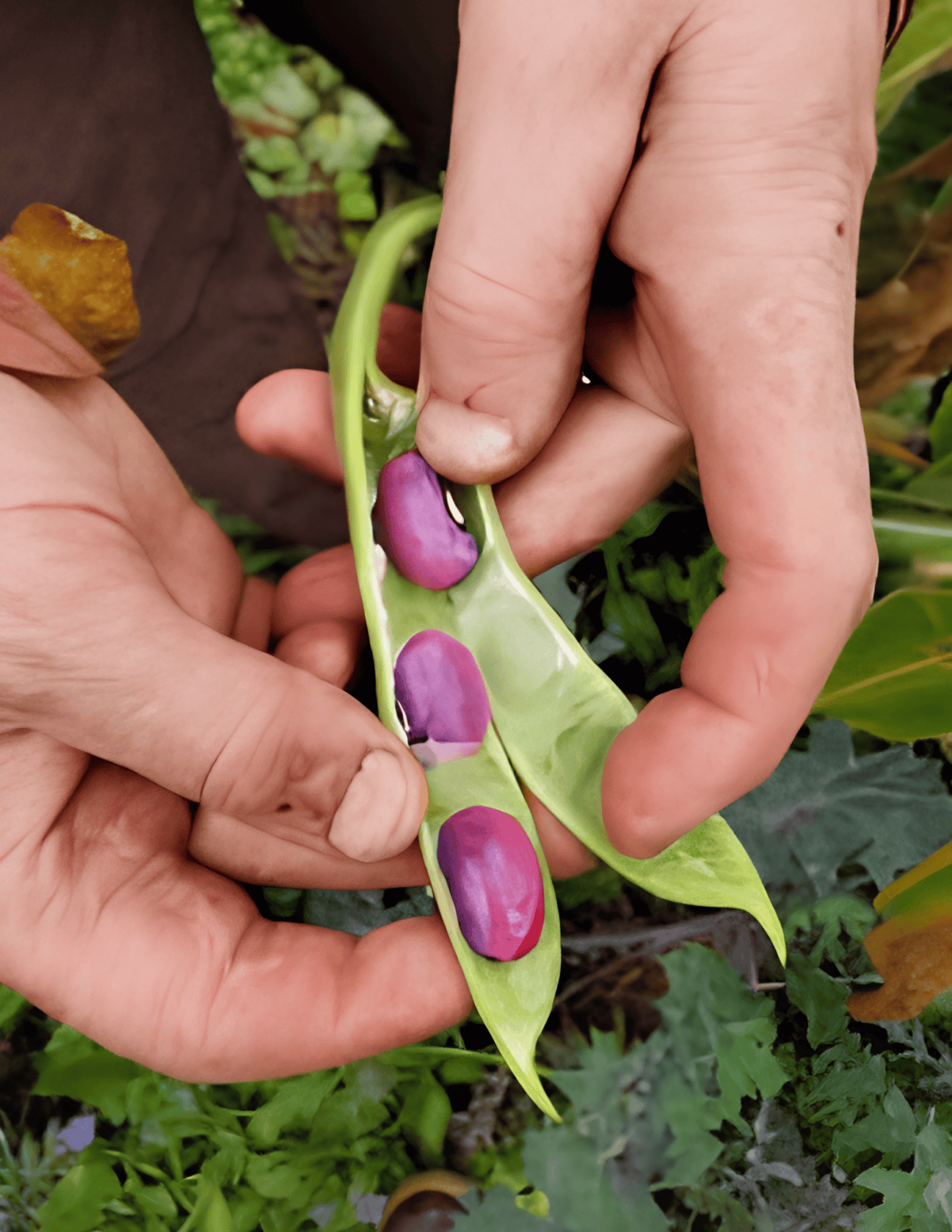
Community Food
Assessment
An overview of the current state of the food system in San Juan County.
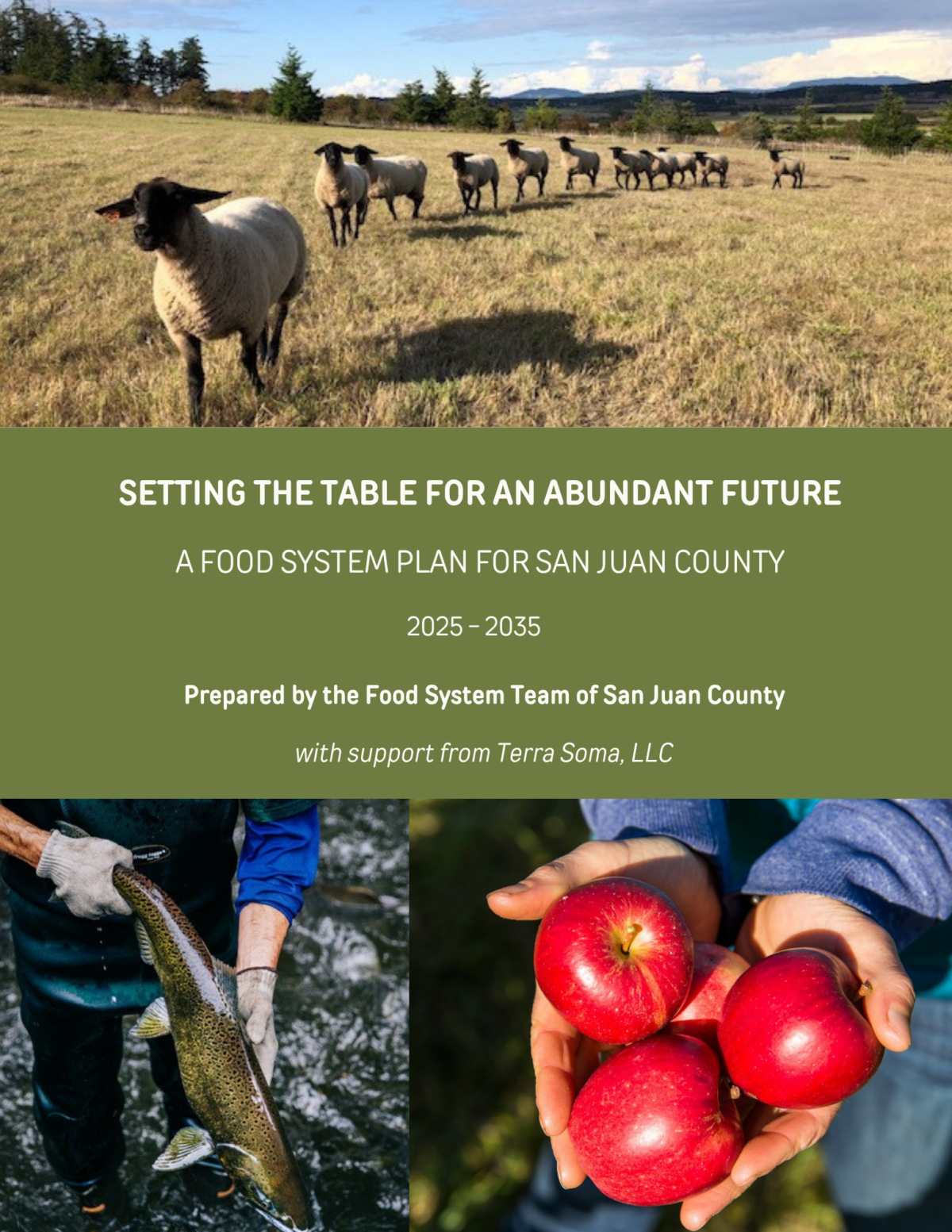
A Food System Plan for San Juan County
Prepared by the Food System Team of San Juan County.
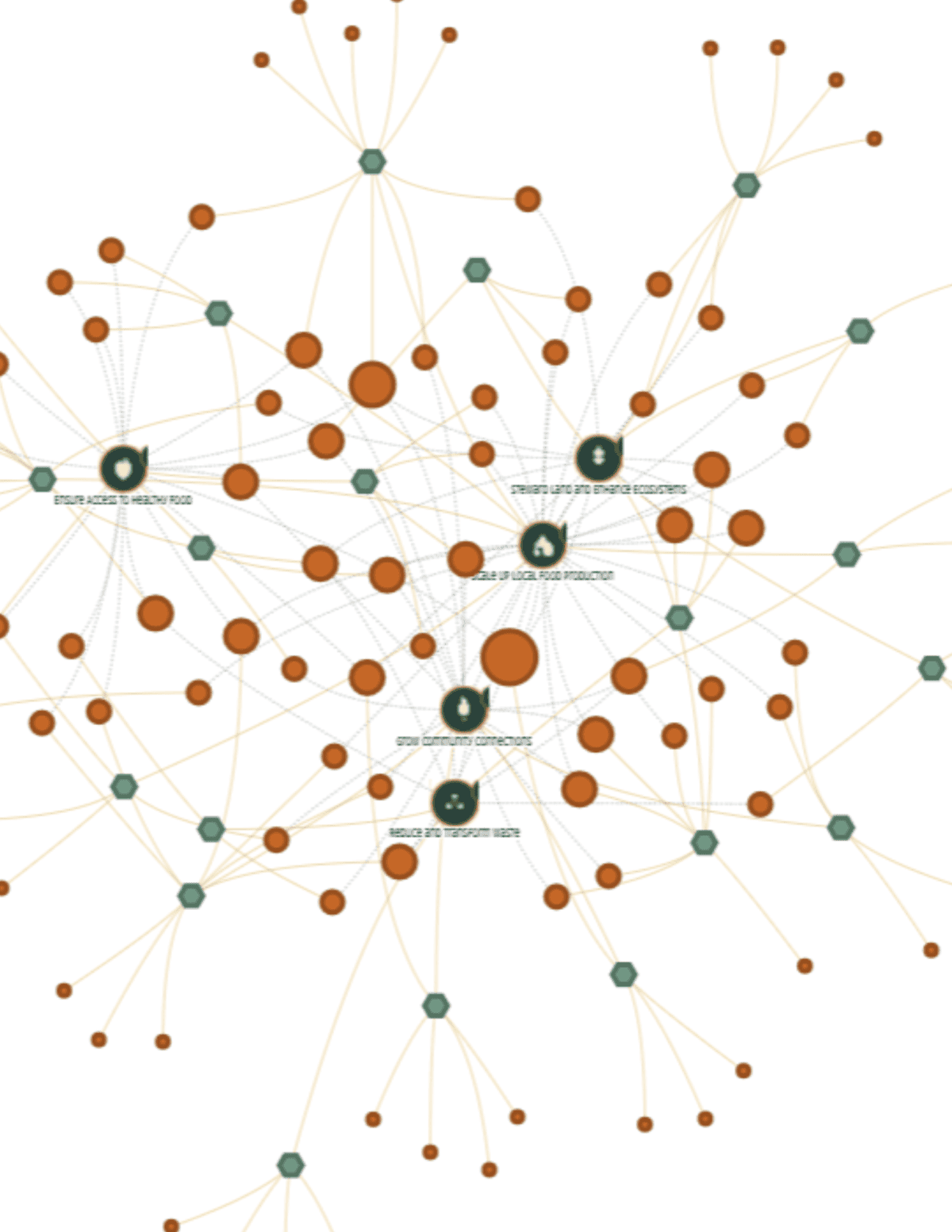
Interactive Food System for San Juan County
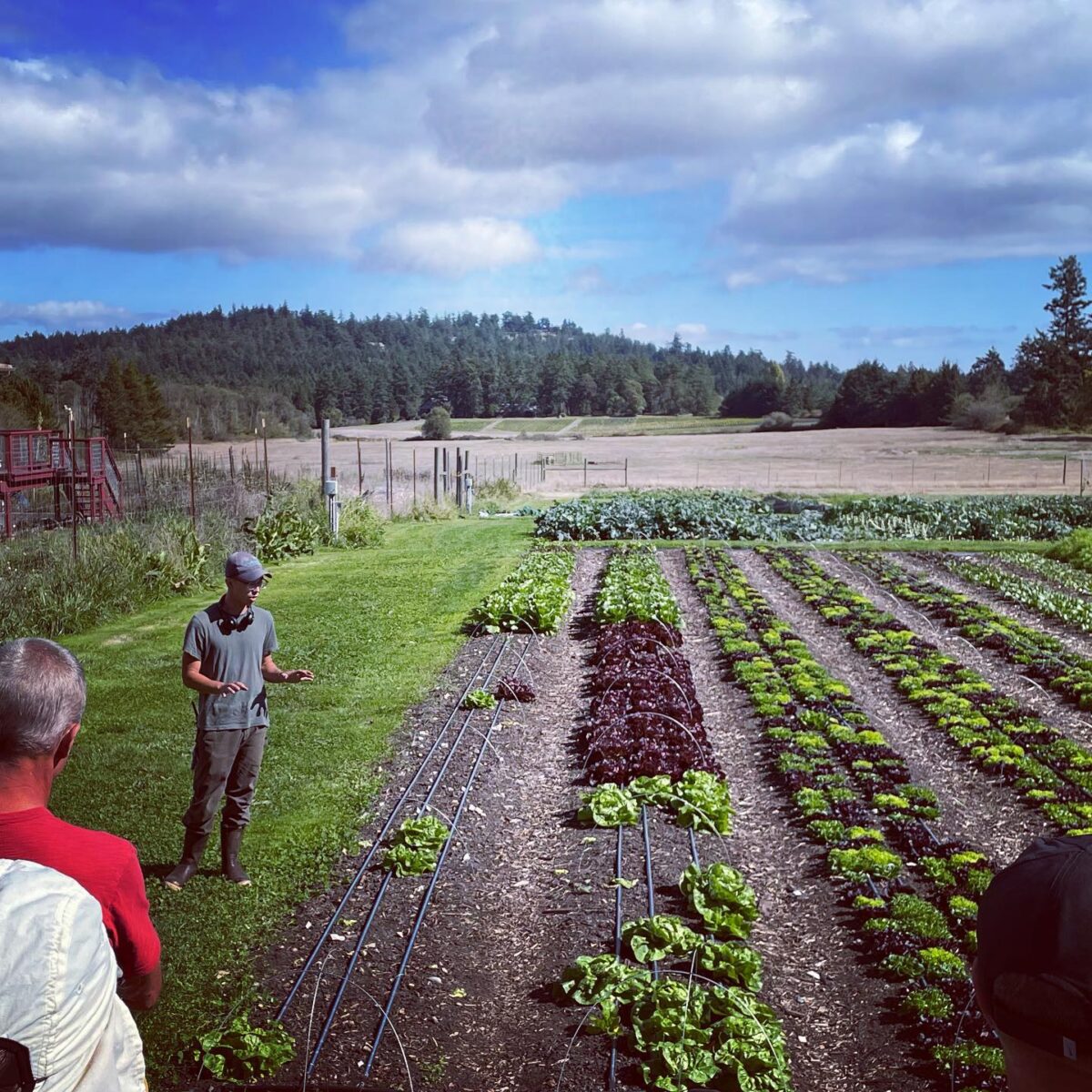
The Work Continues
Over the past seven years, the Food System Team coordinated the Community Food Assessment, development of the Food System Plan, and the tools needed to help move the Plan into implementation. The Team is wrapping up the projects it was formed and funded to accomplish and will formally conclude its work. Practical ways to build the connective capacity that allows organizations to work together in a coordinated fashion and move shared priorities forward include annual opportunities to review progress, smaller priority teams that form around timely projects, and this new interactive version of the Plan.
Going forward, the Agricultural Organizations Retreat provides a recurring opportunity for coordination and shared accountability. Organizations can report on the work they are leading, identify gaps, develop collaborative projects, and set priorities for the coming year. The annual Agricultural Summit offers another opportunity to reconnect and build partnerships. While this is different from having one organization responsible for the entire Plan, it provides a practical way to keep the work connected and moving forward.
The Food System Team wishes to express deep appreciation to all those who have made this project possible: Terra Soma, LLC for absolutely instrumental pro bono services; the generous funders of this significant undertaking; USDA’s Regional Food System Partnerships grant program; San Juan Islands Agricultural Guild for serving as fiscal sponsor; Northwest Agriculture Business Center for technical and administrative support; and the hundreds of people who engaged with our process and care so deeply about the San Juan Islands’ food system.